Trump’s Korea policy signals a new security order in East Asia
US
President Donald Trump’s approach to South Korea and his possible renewed
engagement with North Korea are raising questions about the future of East
Asia’s long-standing security structure.Washington’s
decision to shorten its annual military exercise with Seoul, Pyongyang’s
cautious response, China’s changing strategic position and Japan’s rapid
military expansion are reshaping the regional balance.The
US and South Korea reduced the duration of the annual Ulchi Freedom Shield
exercise from 11 days to five. Trump described the move as a goodwill gesture
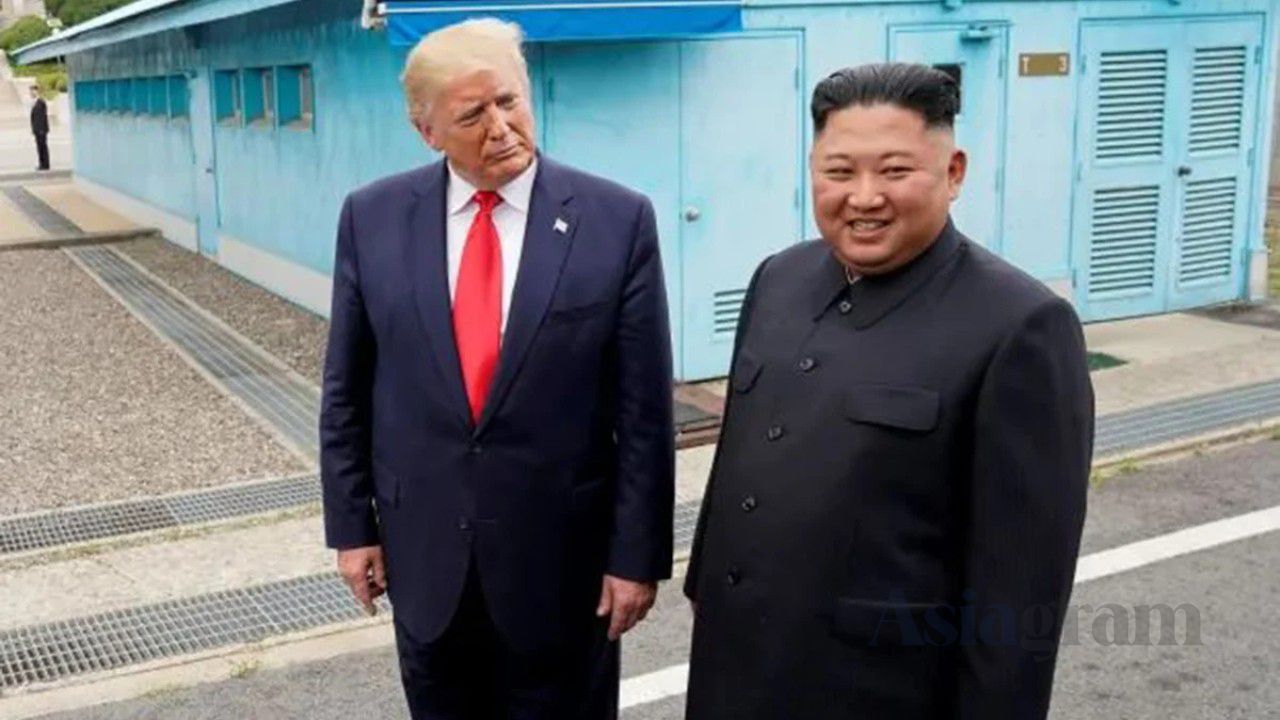
towards North Korean leader Kim Jong Un, saying he knew Kim “very well” and
that they had a “very good relationship.”Pyongyang,
however, has remained cautious. Kim Jong Un’s sister, Kim Yo Jong, said she was
unaware of any recent communication between the two leaders, while
acknowledging that Kim had “good memories and feelings” towards Trump.Analysts
say North Korea appears open to dialogue, but wants Washington to recognise it
as a nuclear-armed state and abandon what Pyongyang calls its hostile policy.
The US, meanwhile, has not formally abandoned its demand for complete
denuclearisation.China
is also adjusting its position. During Foreign Minister Wang Yi’s visit to
South Korea, Beijing called on Seoul to pursue greater strategic autonomy and
avoid being drawn into military bloc confrontations.Wang
also stressed peaceful coexistence on the Korean Peninsula without directly
referring to North Korea’s denuclearisation, suggesting a possible shift in
Beijing’s priorities.At
the same time, China is increasingly concerned about Japan’s expanding military
capabilities. Wang warned that Japanese militarism should never be allowed to
rise again.Japan
has accelerated defence spending and military reforms under Prime Minister Sana
Takaichi. Its core defence budget has reached a record 9.04 trillion yen, while
Tokyo has also moved to strengthen intelligence coordination and ease
restrictions on arms exports.South
Korea, meanwhile, is considering greater self-reliance in defence. President
Lee Jae Myung has pushed to accelerate efforts to regain wartime operational
control of South Korean forces and has backed plans for a nuclear-powered
submarine.The
developments point to an emerging strategic triangle involving the US, China
and Japan, with South Korea caught between Washington’s changing commitments,
Beijing’s economic influence and Tokyo’s growing military power.The
Asia-Pacific Economic Cooperation summit in Shenzhen in November could become
an important test of the new regional balance. Trump, Chinese President Xi
Jinping, the leaders of Japan and South Korea, and potentially Kim Jong Un
could be in the same city.Analysts
say the outcome could either help ease regional tensions or expose deeper
divisions among the major powers.For
now, the post-World War II security architecture in East Asia appears to be
under growing pressure, as US allies seek greater strategic independence, Japan
expands its military role and China works to reshape the regional order.