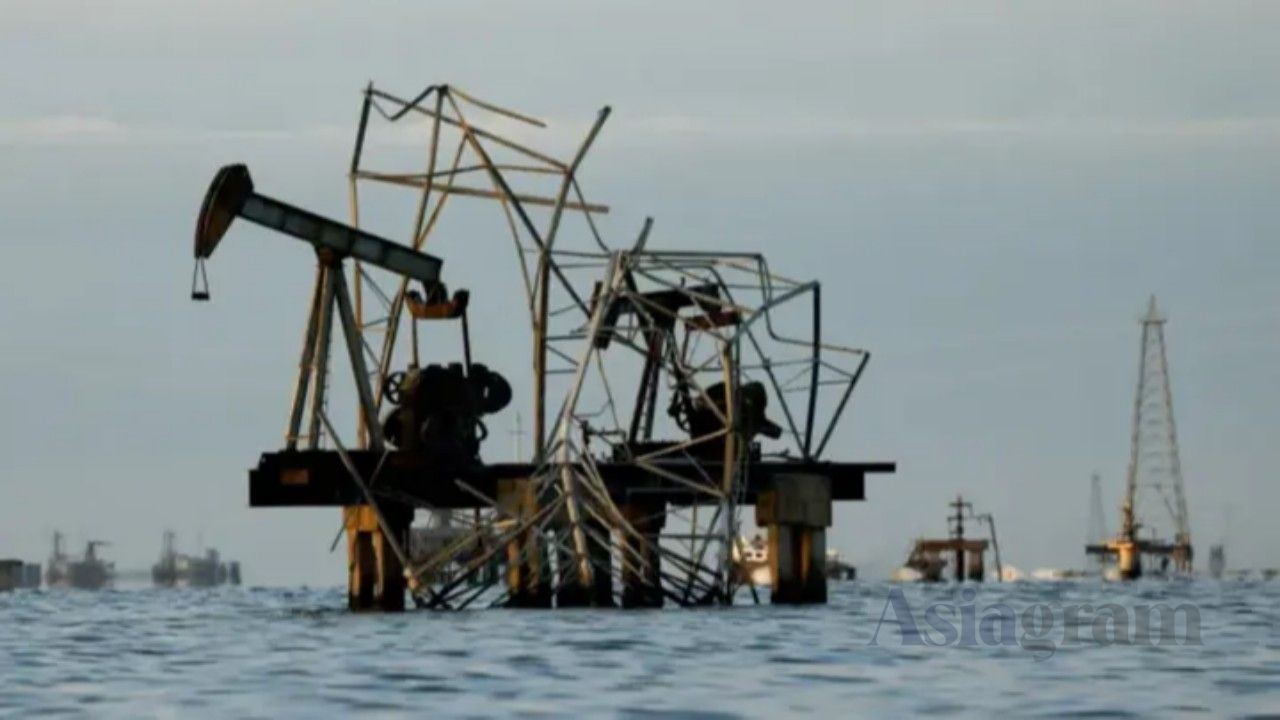
Oil Has Defined US-Venezuela Ties for a Century, and the Rivalry Is Entering a New Phase
For nearly a century, oil has
been one of the central forces shaping relations between the United States and
Venezuela. From cooperation to confrontation, nationalisation to sanctions, oil
interests have repeatedly influenced major turning points in the relationship
between the two countries.A recent agreement giving the
United States majority control over Venezuela’s vast oil resources has opened a
new chapter in that long and often turbulent history.A visual analysis has
highlighted the strategic importance Washington has historically attached to
Venezuelan oil. A 1950 US State Department document, for instance, stated that
the objective of securing adequate oil supplies from Venezuela influenced
virtually all US policies in one way or another.Venezuela's
vast oil reservesVenezuela holds the world's
largest proven reserves of crude oil. During World War II, the country became a
major supplier of fuel for Allied warplanes, ships and tanks.Close economic ties between
Washington and Caracas continued for decades after the war. US energy companies
also maintained significant operations in Venezuela's oil industry.The relationship began to
change substantially after Hugo Chávez became president of Venezuela in 1999.Known for his socialist and
anti-US stance, Chávez strengthened ties with China, Russia and Iran. At the
same time, he began reducing the role of foreign companies in Venezuela's oil
industry and expanding state control.State
control increases under ChávezIn 2007, Chávez further
tightened state control over Venezuela's oil fields. Foreign companies were
allowed to remain as minority partners, while the state-owned oil company
retained majority control.US energy giant Chevron
accepted the new terms and continued operating in Venezuela. ExxonMobil and
ConocoPhillips, however, rejected the arrangements and withdrew from the
country's oil sector. They later engaged in lengthy legal battles with
Venezuela over compensation.After Chávez died, Nicolás
Maduro came to power in 2013. He largely continued Chávez's policies and
maintained close relations with Russia and China.Washington, meanwhile,
imposed sanctions on the Maduro government and repeatedly criticised it as
undemocratic and illegitimate.Sanctions
deepen the economic crisisUS sanctions, combined with
corruption and Venezuela's domestic economic crisis, further weakened the
country's economy.During this period, a large
share of Venezuela's oil exports shifted towards China. Beijing not only
purchased Venezuelan oil but also received oil as repayment for loans
previously provided to Caracas.Relations between Washington
and Caracas subsequently deteriorated further.The United States accused
Maduro of involvement in drug trafficking and announced a $50 million reward
for information leading to his arrest. Experts, however, have questioned
whether sufficient evidence has been presented to support some of the US
allegations against Maduro.Dramatic
turn in 2026The situation took a dramatic
turn at the beginning of 2026 when US special forces carried out an operation
in Caracas and detained Maduro.Delcy Rodríguez subsequently
assumed office as acting president and her government chose a path of
cooperation with Washington.In August, US President
Donald Trump announced an agreement aimed at establishing extensive US control
over Venezuela's oil resources.Under the agreement, the
United States is set to gain majority control over more than 65 billion barrels
of proven oil reserves. The White House described it as “the largest oil deal
in the history of the world” and said the agreement would secure US energy
dominance for the next century.Debate
over the agreementThe agreement has sparked
debate inside Venezuela.Economist Francisco Rodríguez
criticised the deal as “exploitative”, arguing that it was not negotiated
between equal sides under Venezuela's current political circumstances.Opposition leader María
Corina Machado has also said that decisions over the country's natural
resources should belong to the Venezuelan people, not to an unelected
government.The US administration, however,
presents the agreement as an initiative to rebuild Venezuela's economy,
increase oil production and create a path towards democratic change in the
country.Washington also sees reducing
Chinese and Russian influence and restoring US influence over Venezuela's oil
sector as important strategic objectives.Oil
remains at the centreThe history of US-Venezuela
relations over the past century shows that one issue has repeatedly returned to
the centre of the relationship: oil.The resource that once formed
the basis of close economic cooperation later became one of the main sources of
confrontation between the two countries.
The latest oil agreement has once again placed
Venezuelan crude at the centre of the relationship, this time within a
significantly different geopolitical landscape involving the United States,
China and Russia.