
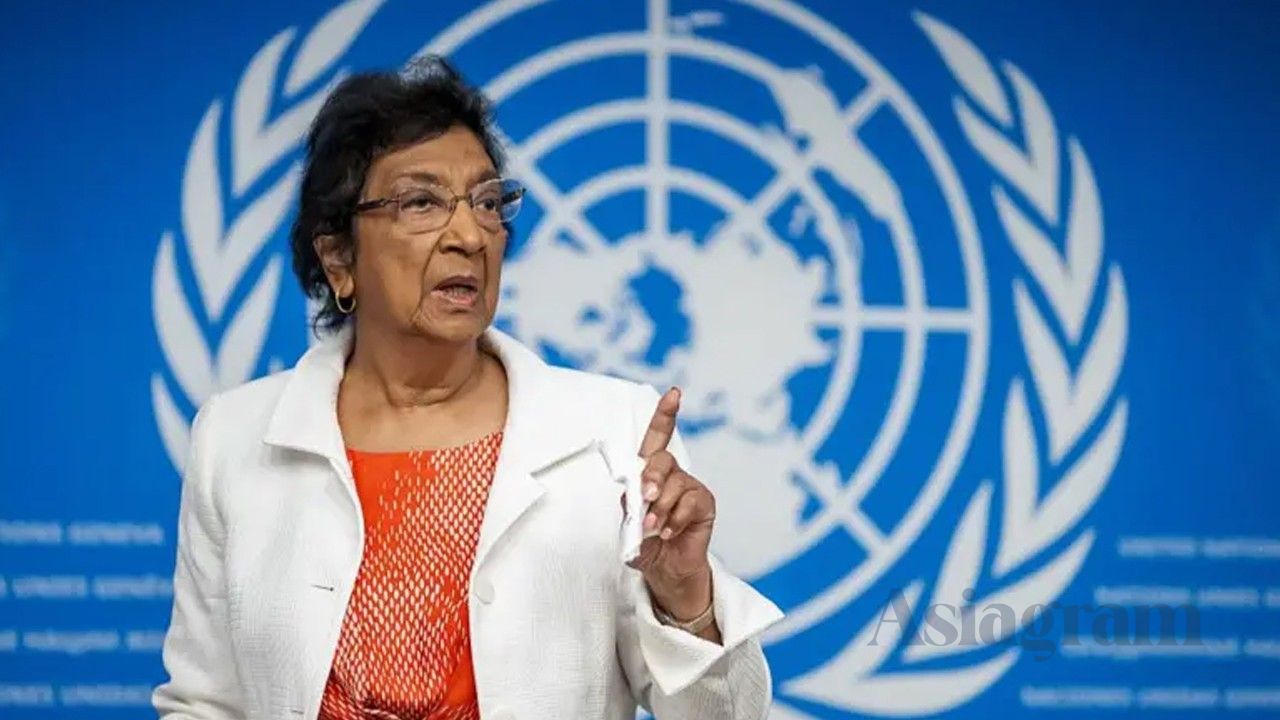
Pillay, a prominent jurist, has spent much of her
career working to protect human rights and strengthen accountability for
serious international crimes.
She served as the UN High Commissioner for Human
Rights from 2008 to 2014. Her judicial career also includes positions at South
Africa’s High Court, the International Criminal Tribunal for Rwanda and the
International Criminal Court.
Born on September 23, 1941, in Durban, South
Africa, to a family of Indian Tamil origin, Pillay pursued her legal education
at the University of Natal before earning an LLM and a Doctor of Juridical
Science (SJD) degree from Harvard Law School.
She is recognised as the first South African
woman to earn a doctorate in law from Harvard.
Pillay began her legal career representing
political prisoners and activists who opposed South Africa’s apartheid regime.
Her work included legal efforts on behalf of anti-apartheid leader Nelson
Mandela and others who challenged the system of racial discrimination.
Her early experience defending those facing political
persecution helped shape a career focused on human rights, equality and the
rule of law.
Pillay later became involved in international
judicial institutions dealing with some of the gravest crimes under international
law.
She served as a judge at the International
Criminal Tribunal for Rwanda, which was established to prosecute those
responsible for genocide and other serious violations committed during the 1994
Rwandan genocide. She also served at the International Criminal Court.
In 2008, she took office as the UN High
Commissioner for Human Rights, serving until 2014. During her tenure, she
worked on issues involving human rights protection, accountability and the
response to abuses around the world.
Her career has been closely associated with
efforts to ensure that allegations of serious international crimes are
investigated and that those responsible are held accountable under the law.
The Nobel Peace Prize was established under the
will of Swedish industrialist Alfred Nobel in 1895.
According to his will, the prize is intended to
recognise individuals or organisations that have made outstanding contributions
to promoting fraternity among nations, reducing or abolishing standing armies,
and advancing peace.
If confirmed by the Norwegian Nobel Committee, the reported award to Pillay would recognise her contribution to human rights and international justice.
Friday, October 9, 2026
Published Date : October 9, 2026