
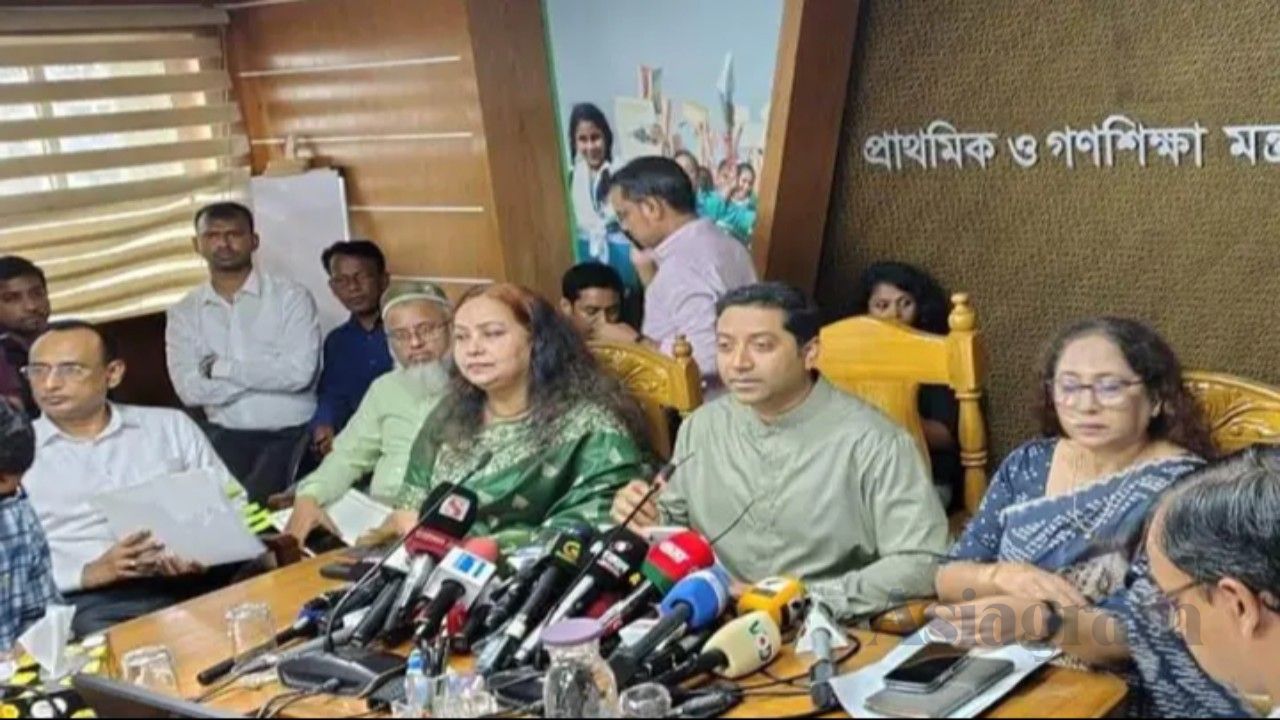
The transfer process for teachers at government primary schools across the country has been suspended indefinitely until the deployment of around 14,500 newly recruited teachers is completed. The decision will take effect from Monday. State Minister for Primary and Mass Education Bobby Hajjaj announced the decision at a press conference at the Secretariat on Monday.
The state minister said the teacher transfer process would resume after the newly recruited teachers are appointed. However, the existing transfer policy may be changed at that time. After the appointment of the new teachers, the transfer process will resume. Whether it will follow the existing policy or a new system will be decided then, Bobby Hajjaj said.
He also announced that mid-day meals would be introduced in all primary schools across the country from next year. Regarding stipends, the state minister said the government was reviewing the issue along with other aspects of primary education. He said there was a growing view among officials that stipends should be based more on financial need. The government would consider increasing the number of beneficiaries under such a system, he added.
Bobby Hajjaj said
the government was working to make primary education more effective, inclusive
and quality-oriented. Efforts are also being made to strengthen non-formal
education programmes to bring out-of-school children and adolescents into the
education system.
He said the government was giving particular importance to combining education with employable skills, using technology and ensuring the inclusion of marginalised communities. Referring to Article 17 of the Constitution, the state minister said the state has a fundamental responsibility to establish a universal, free and compulsory education system and eliminate illiteracy.
According to Labour Force Survey 2024 data, the literacy rate among people aged seven and above in Bangladesh stands at 78.98 percent, he said. Despite the progress, a significant number of people still remain outside desired educational and skills opportunities, including out-of-school and dropout children and adolescents, marginalised communities and adults deprived of education, he said.
Bobby Hajjaj said providing educational opportunities to these groups was a state responsibility and essential for the country's continued development. He added that the government's education policy focuses on enhancing people's capabilities and developing human resources. Infrastructure development alone is not enough for a country to progress; knowledge, skills, creativity, ethics and work capacity are also essential for building capable citizens.
Thursday, September 17, 2026
Published Date : September 7, 2026