
Friday, August 7, 2026
Daily Asiagram

Bank Sector Reforms Bring Relief, but Challenges Remain

Bank Sector Reforms Bring Relief, but Challenges Remain

Bangladesh’s banking sector has shown signs of recovery over the past two years, but deep-rooted problems from years of weak governance, irregular lending and financial mismanagement continue to weigh heavily on the sector.

After the July 2024 mass uprising and the change of government, the interim administration began a series of reforms aimed at restoring discipline in the banking system. The current government has continued those initiatives, including restructuring bank boards, strengthening supervision and moving ahead with the merger of five weak banks.

Over the last two years, authorities have introduced policies to control default loans, launched investigations into alleged financial irregularities, proposed amendments to banking laws, planned an asset management company and strengthened risk-based monitoring.

However, banking sector experts say the damage accumulated over the past decade and a half cannot be repaired quickly. They believe sustained reforms will be needed for several years to bring the sector back to stability.

When the interim government took charge, the banking sector was facing severe pressure, with declining foreign reserves, an unstable dollar market, high inflation and liquidity shortages in several banks.

Reserves, Remittances Show Positive Trend

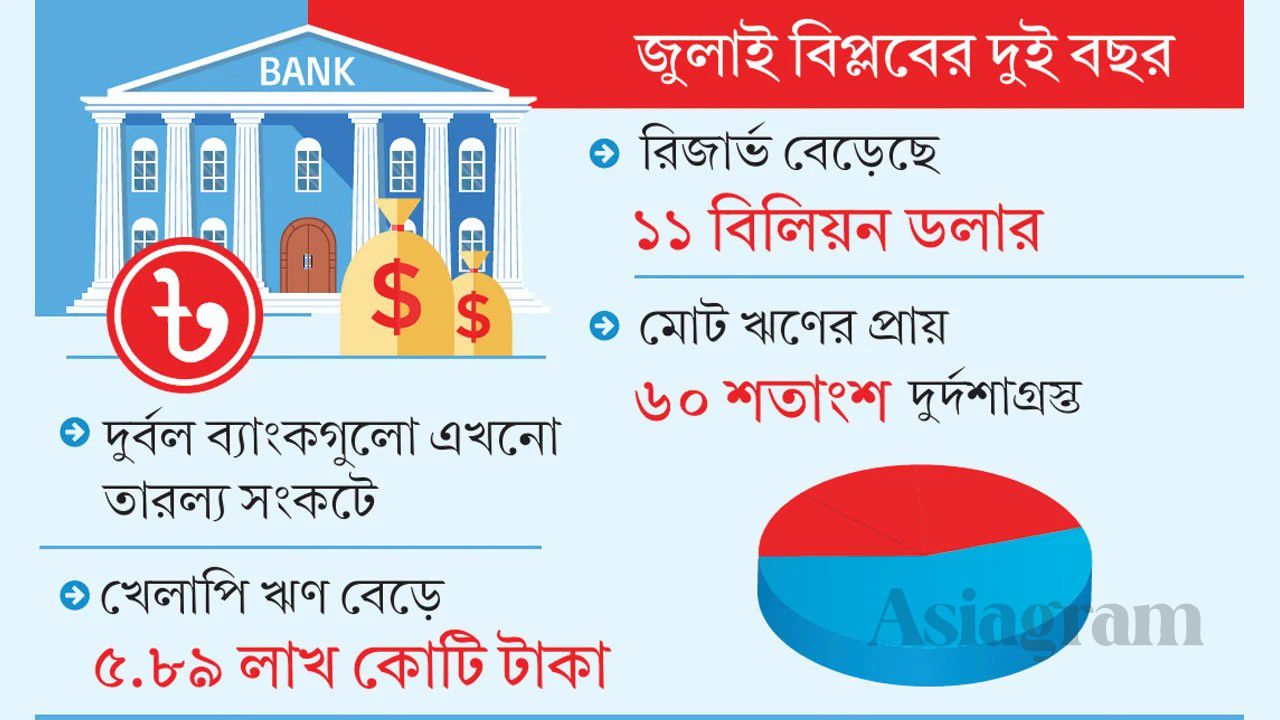
Foreign exchange reserves have increased significantly in the last two years. Reserves, which stood at around $25 billion before the government change, rose to $36 billion by the end of July, an increase of about $11 billion.

A market-based exchange rate system introduced by Bangladesh Bank in line with IMF recommendations helped stabilise the foreign exchange market and reduce the gap between official and open-market dollar rates.

Remittance inflows also recorded strong growth. Bangladesh received a record $35.56 billion in remittances in the 2025-26 fiscal year, marking a 17.30 percent increase from the previous year.

Default Loans Remain Biggest Concern

Despite improvements in some economic indicators, default loans remain the biggest challenge for the banking sector.

According to Bangladesh Bank data, default loans stood at Tk 2.11 trillion before the government change in June 2024. By March this year, the amount had increased to Tk 5.88 trillion, while provisioning shortages rose to Tk 2.05 trillion.

The capital position of banks has also raised concerns. Bangladesh Bank’s financial stability report showed that the capital adequacy ratio against risk-weighted assets fell to negative 2.64 percent last year, far below the Basel-III recommended minimum requirement of 12.50 percent.

Reforms Continue Amid Recovery Efforts

Authorities have taken steps to improve governance, recover bad loans, strengthen regulatory frameworks and restructure troubled banks. A risk-based supervision system has also been introduced to identify weaknesses at an early stage.

Economists say the banking sector has made progress in restoring stability, but recovering defaulted loans, bringing back allegedly siphoned-off money, rebuilding capital and completing bank restructuring will be crucial for long-term recovery.

Topic : BangladeshEconomy BusinessNews Economy Banking Reform BankingSector DefaultLoans BangladeshBank FinancialStability

Daily Asiagram

Friday, August 7, 2026


Bank Sector Reforms Bring Relief, but Challenges Remain

Published Date : August 6, 2026

featured Image
Bangladesh’s banking sector has shown signs of recovery over the past two years, but deep-rooted problems from years of weak governance, irregular lending and financial mismanagement continue to weigh heavily on the sector.After the July 2024 mass uprising and the change of government, the interim administration began a series of reforms aimed at restoring discipline in the banking system. The current government has continued those initiatives, including restructuring bank boards, strengthening supervision and moving ahead with the merger of five weak banks.Over the last two years, authorities have introduced policies to control default loans, launched investigations into alleged financial irregularities, proposed amendments to banking laws, planned an asset management company and strengthened risk-based monitoring.However, banking sector experts say the damage accumulated over the past decade and a half cannot be repaired quickly. They believe sustained reforms will be needed for several years to bring the sector back to stability.When the interim government took charge, the banking sector was facing severe pressure, with declining foreign reserves, an unstable dollar market, high inflation and liquidity shortages in several banks.Reserves, Remittances Show Positive TrendForeign exchange reserves have increased significantly in the last two years. Reserves, which stood at around $25 billion before the government change, rose to $36 billion by the end of July, an increase of about $11 billion.A market-based exchange rate system introduced by Bangladesh Bank in line with IMF recommendations helped stabilise the foreign exchange market and reduce the gap between official and open-market dollar rates.Remittance inflows also recorded strong growth. Bangladesh received a record $35.56 billion in remittances in the 2025-26 fiscal year, marking a 17.30 percent increase from the previous year.Default Loans Remain Biggest ConcernDespite improvements in some economic indicators, default loans remain the biggest challenge for the banking sector.According to Bangladesh Bank data, default loans stood at Tk 2.11 trillion before the government change in June 2024. By March this year, the amount had increased to Tk 5.88 trillion, while provisioning shortages rose to Tk 2.05 trillion.The capital position of banks has also raised concerns. Bangladesh Bank’s financial stability report showed that the capital adequacy ratio against risk-weighted assets fell to negative 2.64 percent last year, far below the Basel-III recommended minimum requirement of 12.50 percent.Reforms Continue Amid Recovery EffortsAuthorities have taken steps to improve governance, recover bad loans, strengthen regulatory frameworks and restructure troubled banks. A risk-based supervision system has also been introduced to identify weaknesses at an early stage.Economists say the banking sector has made progress in restoring stability, but recovering defaulted loans, bringing back allegedly siphoned-off money, rebuilding capital and completing bank restructuring will be crucial for long-term recovery.

Daily Asiagram

Editor & publisher: Kayes Ahmed Salim
Copyright © 2026 Daily Asiagram | All Rights Reserved
Bank Sector Reforms Bring Relief, but Challenges Remain
0:00 0:00
1.0x