
Tuesday, September 1, 2026
Daily Asiagram

AI helps surgeons remove brain tumour in world first

AI helps surgeons remove brain tumour in world first
Photo: Collected

Artificial intelligence has been used to assist surgeons in real time during a complex brain operation for the first time, marking a significant development in medical technology.

Surgeons at University College London Hospitals (UCLH) successfully removed an 11mm non-cancerous tumour from the pituitary gland of 48-year-old father of two, Rhys Hibbert, with the assistance of an AI system.

Doctors said the operation could have prevented Hibbert from permanently losing his eyesight.

Until around 18 months ago, Hibbert, a customer service manager from Bedfordshire, was fit and healthy. He regularly walked two miles during his lunch break. But one day he suddenly collapsed and suffered a seizure while walking.

A subsequent brain scan revealed a marble-sized tumour at the base of his skull, in the pituitary gland. The gland plays an important role in hormone regulation and is located close to the carotid artery, which supplies blood to the brain, and the optic nerves responsible for vision.

As the tumour grew, it began pressing against the optic nerve, narrowing Hibbert’s peripheral vision. He started bumping into objects and experienced severe fatigue and dizziness.

Reflecting on his condition, Hibbert said he had always got out of bed and made a cup of coffee for his wife during their 18 years of marriage and did not want the tumour to take that away from him.

When doctors offered him the opportunity to become the first patient in the experimental AI-assisted procedure, Hibbert said he did not hesitate.

If patients aren’t prepared to take part in research, how are doctors going to learn and how is medicine going to progress? he said.

AI provides a second set of eyes

The procedure involved inserting an endoscope through the nose to reach the tumour behind the base of the skull.

Finding a safe route was particularly challenging because patients’ anatomy varies and the tumour was located behind bone and tough membranes.

In conventional procedures, there is a 25 to 50 per cent chance of being unable to remove the entire tumour, while the risk of damaging a major blood vessel is estimated at between 0.5 and 2 per cent.

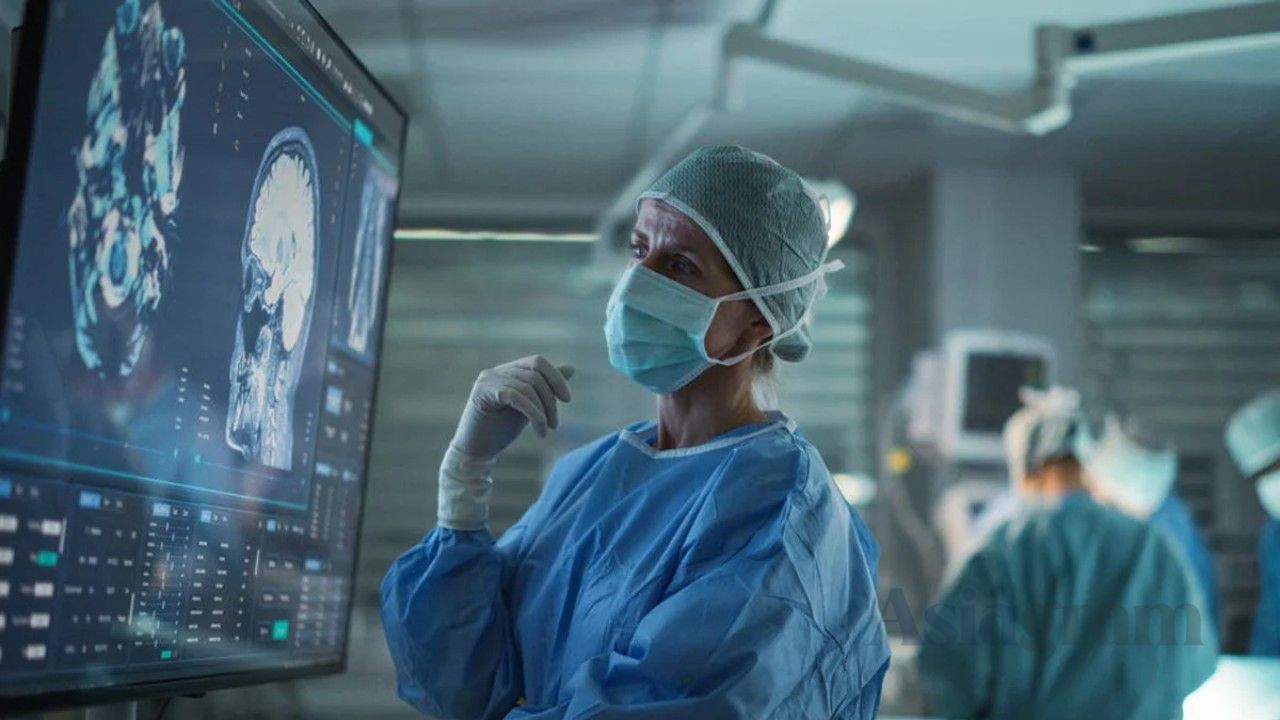
During the operation, the AI system analysed live video footage on a second screen. It identified hidden anatomical structures, blood vessels and nerves and guided surgeons towards the safest route to the tumour.

The system had been trained using hundreds of surgical videos and detailed data. Surgeons typically perform only 10 to 20 such operations a year, while the AI system has been exposed to far more surgical procedures during its training.

Professor Hani Marcus, who assisted with the operation, said the system could work like a second set of expert eyes for surgeons.

He said the ability to provide assistance during a live operation was what distinguished the technology from other systems.

However, the surgeons retained full control of the procedure at all times.

The researchers ultimately hope to develop what they describe as a ChatGPT for surgery  an AI system that could advise surgeons during operations like a second specialist in the room.

It has given me my life back

The technology was developed following years of laboratory research funded by the National Institute for Health and Care Research and Google.

Hibbert said the technology had clear benefits from a patient-safety perspective.

We don’t have road signs inside our heads, he said.

Describing his recovery, Hibbert said that when he opened his eyes after surgery, he felt as though he could see clearly in every direction.

I haven’t seen this clearly for a year, he said.

He also said his physical strength had returned and the side effects he had experienced before the operation had disappeared.

It has given me my life back, Hibbert said.

UK health innovation minister James Frith welcomed the successful operation but stressed that AI must be used with appropriate safeguards.

We will always make sure safety is taken seriously, he said, adding that the government would also ensure the opportunities created by AI could be used to improve healthcare.

The research team is now preparing to test the technology on a larger scale.

Source: BBC

Topic : Artificial Intelligence Brain Surgery Medical Innovation UK UCLH Healthcare Technology

Daily Asiagram

Tuesday, September 1, 2026


AI helps surgeons remove brain tumour in world first

Published Date : August 27, 2026
featured Image
Artificial intelligence has been used to assist surgeons in real time during a complex brain operation for the first time, marking a significant development in medical technology.Surgeons at University College London Hospitals (UCLH) successfully removed an 11mm non-cancerous tumour from the pituitary gland of 48-year-old father of two, Rhys Hibbert, with the assistance of an AI system.Doctors said the operation could have prevented Hibbert from permanently losing his eyesight.Until around 18 months ago, Hibbert, a customer service manager from Bedfordshire, was fit and healthy. He regularly walked two miles during his lunch break. But one day he suddenly collapsed and suffered a seizure while walking.A subsequent brain scan revealed a marble-sized tumour at the base of his skull, in the pituitary gland. The gland plays an important role in hormone regulation and is located close to the carotid artery, which supplies blood to the brain, and the optic nerves responsible for vision.As the tumour grew, it began pressing against the optic nerve, narrowing Hibbert’s peripheral vision. He started bumping into objects and experienced severe fatigue and dizziness.Reflecting on his condition, Hibbert said he had always got out of bed and made a cup of coffee for his wife during their 18 years of marriage and did not want the tumour to take that away from him.When doctors offered him the opportunity to become the first patient in the experimental AI-assisted procedure, Hibbert said he did not hesitate.If patients aren’t prepared to take part in research, how are doctors going to learn and how is medicine going to progress? he said.AI provides a second set of eyesThe procedure involved inserting an endoscope through the nose to reach the tumour behind the base of the skull.Finding a safe route was particularly challenging because patients’ anatomy varies and the tumour was located behind bone and tough membranes.In conventional procedures, there is a 25 to 50 per cent chance of being unable to remove the entire tumour, while the risk of damaging a major blood vessel is estimated at between 0.5 and 2 per cent.During the operation, the AI system analysed live video footage on a second screen. It identified hidden anatomical structures, blood vessels and nerves and guided surgeons towards the safest route to the tumour.The system had been trained using hundreds of surgical videos and detailed data. Surgeons typically perform only 10 to 20 such operations a year, while the AI system has been exposed to far more surgical procedures during its training.Professor Hani Marcus, who assisted with the operation, said the system could work like a second set of expert eyes for surgeons.He said the ability to provide assistance during a live operation was what distinguished the technology from other systems.However, the surgeons retained full control of the procedure at all times.The researchers ultimately hope to develop what they describe as a ChatGPT for surgery  an AI system that could advise surgeons during operations like a second specialist in the room.It has given me my life backThe technology was developed following years of laboratory research funded by the National Institute for Health and Care Research and Google.Hibbert said the technology had clear benefits from a patient-safety perspective.We don’t have road signs inside our heads, he said.Describing his recovery, Hibbert said that when he opened his eyes after surgery, he felt as though he could see clearly in every direction.I haven’t seen this clearly for a year, he said.He also said his physical strength had returned and the side effects he had experienced before the operation had disappeared.It has given me my life back, Hibbert said.UK health innovation minister James Frith welcomed the successful operation but stressed that AI must be used with appropriate safeguards.We will always make sure safety is taken seriously, he said, adding that the government would also ensure the opportunities created by AI could be used to improve healthcare.The research team is now preparing to test the technology on a larger scale.Source: BBC

Daily Asiagram

Editor & publisher: Kayes Ahmed Salim
Copyright © 2026 Daily Asiagram | All Rights Reserved
AI helps surgeons remove brain tumour in world first
0:00 0:00
1.0x