
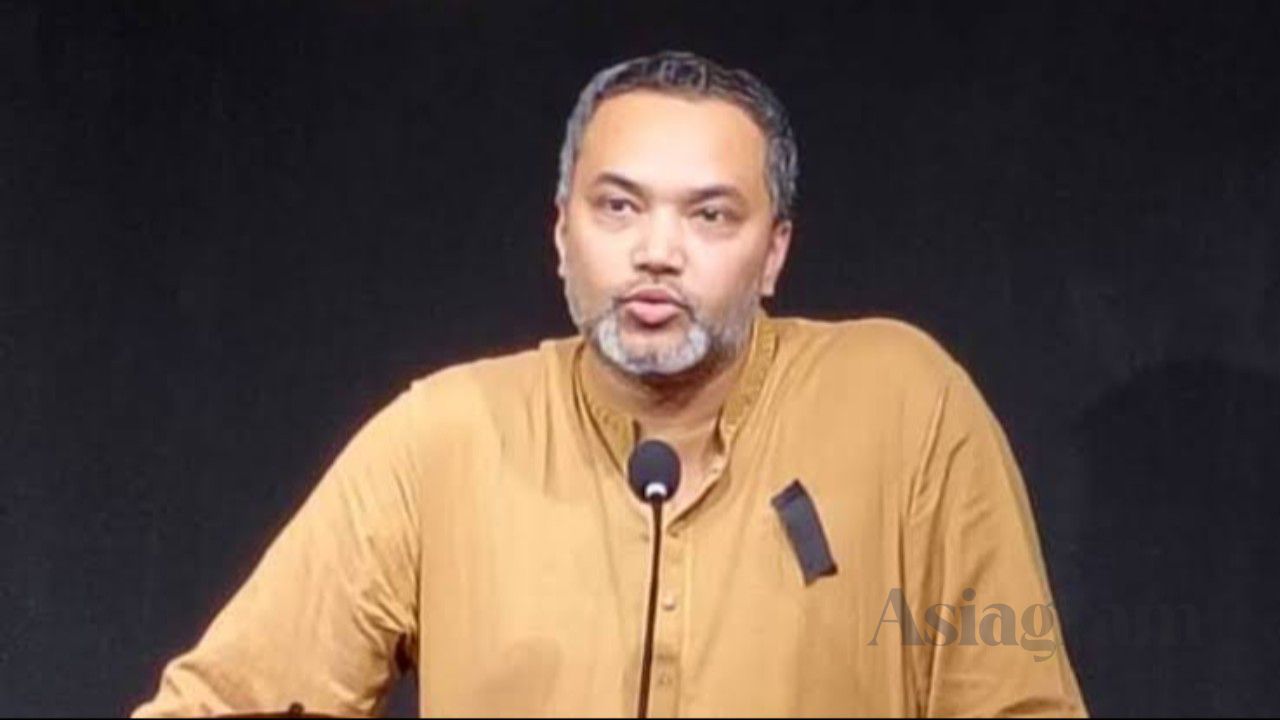
He said the government was
moving away from a culture of artificially inflated GPA-5 results and was
working to ensure more transparent and meaningful assessment.
In an interview with the
state-run Bangladesh Sangbad Sangstha (BSS), Mahdi Amin outlined the
government’s plans for curriculum reform, teacher evaluation, rehabilitation of
students at risk of dropping out, technical education, industry-academia
collaboration and employment services.
Mahdi Amin said the
government would make necessary changes to textbooks for the 2027 academic year
as an interim measure, while a comprehensive curriculum reform would be
introduced from 2028.
From next year, four new
books and subjects will be introduced at the primary and secondary levels, he
said.
A book titled ‘Sports and Culture’ will be
introduced from Class IV, while ‘Learning
with Happiness’ and ‘Technical
Education’ will be introduced from Class VI.
The new curriculum will also
familiarise students with robotics, artificial intelligence and technologies
related to the Fourth Industrial Revolution, he said.
Speaking about the recent SSC
and equivalent examination results, Mahdi Amin alleged that during the previous
government, GPA-5 results were artificially inflated to present better
statistics.
There was even a culture of
passing students without them sitting for examinations, he said.
We have ended that
self-defeating practice. No grace marks were given this time. Students received
their genuine results through a completely neutral and transparent evaluation
process, he added.
The government will not
consider students who failed the recently published SSC examinations or are at
risk of dropping out as a burden, Mahdi Amin said.
He said special policies were
being formulated for them.
Such students will be
encouraged to enrol in Technical Training Centres (TTCs) and short-term
technical and vocational courses. The government will also create employment
opportunities for them and, where necessary, provide financial support to help
them become entrepreneurs, he said.
To bridge the gap between job
seekers and employers, the government plans to establish ‘Employment Exchanges’ at divisional
and district levels, Mahdi Amin said.
Young people will be able to
register with details of their skills and qualifications, allowing industries
and other employers to directly connect with potential workers.
The initiative will initially
be introduced at the divisional level and later expanded to every district,
with the private sector being brought into the process.
The government also plans to
provide digital tablets to teachers under a One Teacher, One Tablet programme, Mahdi Amin said.
The initiative will gradually
cover teachers from primary to higher levels of education. It is intended to
strengthen digital skills, modern training and professional development among
teachers.
The government is also
working to strengthen research at universities and improve their position in
global rankings, he said.
Universities will be
encouraged to conduct joint research with local industries to address
real-world problems. The government also plans to bring Bangladeshi researchers
and academics working abroad back into the country, turning the existing ‘brain
drain’ into ‘brain circulation’.
Government allocations for
research will also be increased significantly, he said.
To reduce disparities between
urban and rural schools, the government has introduced nationwide competitions,
including the ‘Primary School Gold Cup
Football Tournament’ and ‘Innovation
and Startup Competition’.
These initiatives are
intended to provide talented students from remote areas with opportunities to
gain national recognition.
Mahdi Amin said the government was committed to building a generation equipped not only with academic certificates but also with skills, employment opportunities, ethical values and a sense of humanity.
Tuesday, September 1, 2026
Published Date : August 30, 2026